
2026 Tribeca Film Festival Review Roundup Part 2 & Interview with Fabric Director Frank Sun


In Part 2 of our Tribeca coverage we continue to make our way through watching the shorts and selecting our favourites to talk about. See which two live action short and documentary shorts caught our eye as well as our interview with Director of Fabric, Frank Sun below.
Fabric, dir. Frank Sun
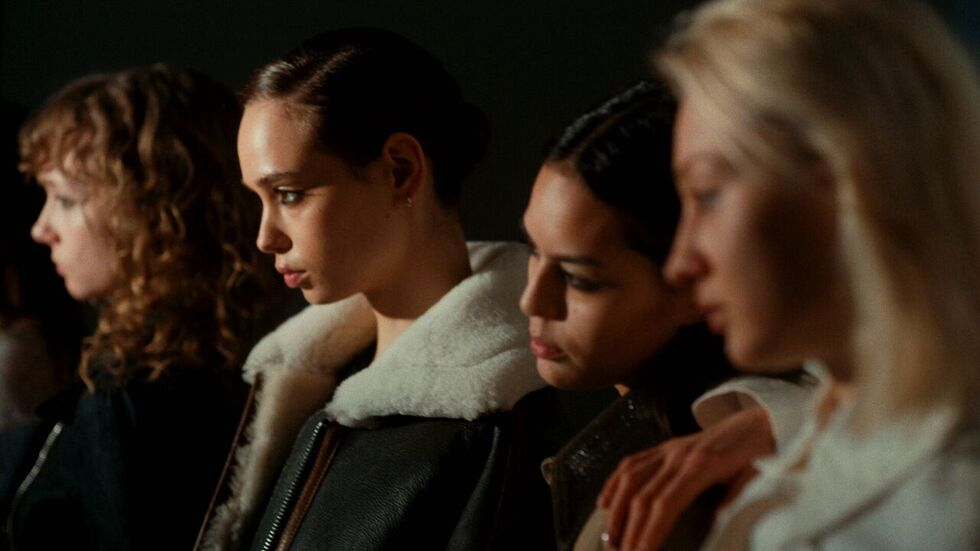
At last year's Tribeca Film Festival, Frank Sun presented We Are Kings, his highly personal short about an Asian boy obsessed with DVDs and films. Through the lens of nostalgia, the director captures the sentiment of seeking belonging as the child of an immigrant in the United States, while weighing the heavy burden of being a first-generation American. A year later, Sun returns to the NYC-based festival with a new short: Fabric. Set during New York Fashion Week, it follows Mack (b), an acclaimed photographer. After one of their shoots, they run into an attractive model, Vanessa (Kate Pittard), who finds out the photographer is attending a high-end party and asks them to help them enter. Suddenly, Mack gets lost in the glamour of their profession, and they question the sentiment of belonging.
At first, Fabric feels an abrupt shift from the director's past project. It is on the opposite coast, in New York; the cinematography by Arthur Woo features darker tones of blue and red, which gives a profound sense of the dimensions of the urban environment. Hence, the character transits a faux reality: the lights are artificial, multiple professionals design the beauty, and the hierarchy of the fashion world is utterly superficial. In this sense, Frank Sun confronts us with plenty of juxtapositions. At first, geographically, Mack moved to NYC to follow their dreams and reached it. Similarly, millions of individuals migrate thousands of miles from home, abandoning their true selves and creating a new identity in that new environment. Another composition is the photographer's craft. In a world that is keen on digital tools; Mack captures their subjects, reveals the prints, and digitizes them. It is a countercurrent in a world of extreme digitalization of the craft, following the capitalist tendencies of cheaper craft and quicker finished products.

Throughout these elements in the filmmaking, Frank Sun follows the thematic axis of his career: belonging and community. If Lin in We Are Kings seeks acceptance of the white kids in California through his expertise in downloading torrents to DVDs, Mack is trying to fit in with the NYC models. Therefore, there is a resonant similarity between the two works that feel intensely different in settings and visuals. Sun's first short is solar, rich in orange tones, and close-ups in cars. Meanwhile, Fabric is cold and full of mid-frame shots. Consequently, the latter presents us with the revealing persona of the other individual, a person who lacks interest in Mack. Even if it sounds artificial and deliberate, the unveiling of the dramatic turn is efficient. It delivers the final message: the solitude of some individuals who seek community far from home. Sometimes, the flashes and glamour are not enough to make people connect to you, and in cases like Fabric, people might use you as a ladder.
Thus, Fabric is a fascinating new effort by Frank Sun, who extracts great performances by b and Kate Pittard, who feature a specific irony and shallowness in their performances. After all, that is the overall vibe of that world.
In this podcast episode, Pedro is joined by Director Frank Sun to discuss going back-to-back at Tribeca with last years We Are Kings and this years short Fabric, and the thematic similarities between the two. They then discuss the use of lighting in Fabric and the casting of b and Kate Pittard as the lead actresses.
Review and Interview by Pedro Lima
Born to Kill, dir. Sally Tran

“Ain’t no other way for a gangster”
Sally Tran’s fast and furious new documentary short Born to Kill tells the story of Vietnamese youths who began arriving in New York City’s Chinatown from the late eighties and early nineties, many of whom were ostracized by the Chinatown community, were homeless and lived on the fringes of the community. They were boys who were looking for the safety and belonging that they didn’t have at home and found it in the infamous BTK gang—they were Born To Kill.
Tran puts the BTK story in context with some colourful history of the Vietnam War and the fall of Saigon. Interviews in stark black and white with gang members, Vietnam historians and other Vietnamese refugees give us a wide-ranging historical picture of the context of Vietnam in the 1970s and 80s. After the war, American soldiers left behind “war babies,” and many of these Vietnamese youths were sent out of their country a few years after the Saigon government had collapsed, then spent months or years in refugee camps before being put into foster families. These youths then left their foster families and banded together, forming the nucleus of what would become the Born to Kill gang (the phrase Born to Kill was adopted from the slogan that U.S. helicopters and soldiers had on their helmets during the Vietnam War).
Like she did in her last narrative short film Don’t Fuck with Ba (a ShortStick Pick in 2024), Tran directs Born to Kill with an incredible amount of style. Working as her own production designer and collaborating with illustrator Sang Oh on an absurdly elaborate series of miniatures and paper doll-like cutouts, Tran fills Born to Kill with colours and textures and styles, all thrown together in a thrilling mix, sometimes even within the same frame. In the absence of archival footage of the actual BTK gang, Tran made reenactments using camcorders from the period, complete with low-resolution images and fuzzy tracking lines. In an unusually long production period for a short film, Tran completed 43 days of fabrication of intricate miniatures and 29 days of shooting with her army of seven cinematographers, an immense amount of effort that shows in every frame of the gorgeously jam-packed film.

Born to Kill was founded by David Thai, who, after the Fall of Saigon in 1975, left Vietnam as a refugee and made his way to the U.S. Struggling to provide for his family, Thai turned to crime. Thai began to assist street youths by freely offering them advice, money and a place to stay, causing many of them to feel indebted to Thai and follow him, forming the beginnings of the gang. Most of the gang members were in their 20s, with a few of the leaders being in their early 30s. Their desire to have the best hair and best clothes quickly morphed into a need to have the best drugs and the best guns—in fact, the gang's prowess is often attributed to the chaotic environment of guns and drugs from their home in Vietnam.
It is easy to see how Born to Kill members served as a sort of inspiration to former fashion designer Tran, as they were well known to have fashioned themselves after the cool antiheroes they saw in American gangster movies, donning dark sunglasses and black suits along with spiked hair. In her research Tran also discovered that David Thai is from District 4 Saigon, infamous for its gang activity, where Tran’s family is also from—in fact, he lived on the same street as her parents. While she originally was unsure if she was the right person to tell the BTK story, in finding this shared history, Tran felt like she was becoming closer to her subjects and decided to bring their story to the screen in her own electric, eclectic way.
What began as a surrogate family for displaced Vietnamese youth, joining the Born to Kill gang offered a sense of identity and protection while demanding allegiance to what only later became a criminal organization. While some refugees of the fall of Saigon attempted to rise above systemic barriers, the members of BTK descended into blackmail, extortion and violence. Teenage boys, unable to speak English, were thrust into a world of systemic neglect and racial hostility, carving out spaces to survive and to belong. At its core, Born to Kill is a film about displacement, resilience, and grief, and its subjects show how they continue to go through the endless, imperfect process of piecing themselves back together.
Review by: Joshua Hunt
Sandy Fannies, dir. Ingrid Runde Saxegaard

Sand i Tissen (Sandy Fannies) is the story of 16 year old Aurora spending a day with her mother Ragnhild at the beach. Throwing their clothes on the sand they dive in with nothing but their bottoms, clearly very comfortable around each other, then sit down in the warm sand to share a peaceful moment together. The setting feels intimate yet relaxed.
Aurora shares that she has had her first sexual encounter with another woman, and she’s worried that the strong feelings she has are not reciprocated. In an effort to consolidate her daughter, Ragnhild shares a story about her first kiss with another woman. This shift steers the conversation towards her experiences, eventually culminating in her feelings towards Aurora's father. But things take a turn when she lets slip that she has had an affair that nobody else in the family knows about.
The nudity of the scenes mirrors the openness the two have towards one another. It doesn’t feel polished or sensual, it is simply a loving and caring relationship between mother and daughter. Up to the point of Ragnhild's big reveal the conversation is honest and affectionate, playful even. Admittedly I am showing some of my Scandi bias here, but I think these types of conversations amongst loved ones is a sign of a healthy relationship with a maturity in the level of trust it has reached.

Director Ingrid Runde Saxegaard then doubles down on this unapologetically human story by dropping the twist of the mothers infidelity. Again, the dialogue is written with its wrinkles and scuff marks on display. The action is presented as a lost love, a lingering thought of what could have been if different choices were made. Not necessarily in a way that is remorseful, in favor of either side, but simple as a fork in the road that never quite leaves your mind.
Both mother and daughter, Silje Breivik and Jenny Evensen respectively, are played with a tender softness and very brief strong external emotions. Ragnhild's initial response is regret towards having overshared, while at the same time clearly feeling relief in having someone to share her feelings with. Again mirroring this is Aurora's initial reaction of despair, which slowly shifts towards some level of understanding. The result is a heartwarming story of kinship, of what a strong, nurtured family relationship can look like. This whirlwind of emotions is hard to tame, but Saxegaard does so with nothing but a beach and a couple of talented actresses – and I for one can’t wait to see what comes next.
Review by: Robin Hellgren
Listen, dir. Taliesin Black Brown
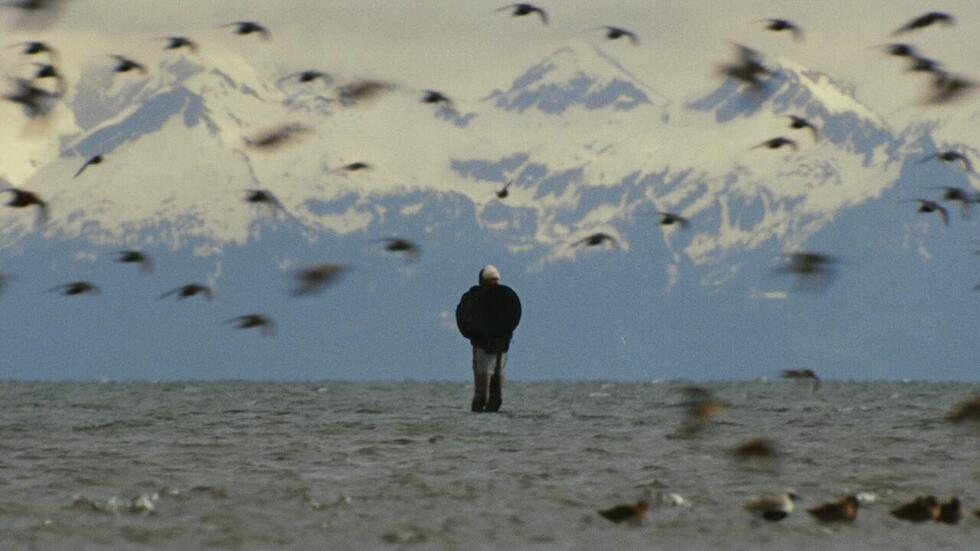
Listen, directed by Taliesin Black Brown, is a short film I won’t soon forget and one that will reverberate with me for years to come. The short follows an Alaskan sound recordist recording nature and it pairs it with clips of him visiting his mother who is suffering from dementia.
Personally, Listen was profound in a way that put years of unnamed feelings into words.
“It’s hard to see your parents unmoored from their memories”
When I was young my dad’s mom (my grandma) developed Alzheimer’s. I didn’t understand it at the time as a child. It came more in thoughts of “why is my grandma telling this story again, she just told it an hour ago”. It happened slowly and then all of a sudden, from a crawl to a run, where she soon forgot me, my dad and the other loved ones around her. It felt like she was still here but I didn’t have the chance to say goodbye. It was difficult to watch her memory go and equally difficult to see my parents, aunts and uncles reaction to no longer being recognized.
“I call it my acoustic awakening when I really learned to slow down and really open my ears”
Sound recordist Hank Lentfer uses sound as an anchor to the unmoored. It is a reminder that sound evokes memory and brings healing. Hearing the loons in this short brought my back to my childhood, riding along the northern Canadian lakes in a dinghy, watching the momma loon carry its babies on it’s back, counting down the seconds that the sun will dip below the horizon. My grandma was a woman of great faith. I am sure if any sound could snap my grandma’s memory back into place for just a moment it would be the church bells on a Sunday morning or a church organ’s first notes of a hymn. It was what steadfastly anchored her to this world.

One of the most peaceful moments of my life the past few years has been learning to birdwatch. Not just by sight but by ears, learning the different calls and “acoustically waking” to the world around me. Watching this short I was reminded with how important those moments are and how they can act as a soothing meditation.
This review so far has felt more like a confession than any sort of critique on film. But the best art does that, it feels and provokes. This is a short that is about healing and brings a lot of healing. It is no surprise to read Taliesin’s site bio and learn that is his goal in film making. Through surviving bone cancer and recovering from twenty surgeries, Taliesin used flying drones with cameras and film making as a way to heal. His goal as a storyteller is to bring healing to our relationship with nature and each other. This is more than evident in Listen as the sounds of nature bring healing to both the subject and his mother.
All personal connections to the content of this aside, Listen is masterful as it pairs breathtaking cinematography and haunting sound design. It is cinematic and immersive — you can easily forget you are in a theatre and not stranded in the Alaskan wilderness. The shot of a sea of birds mid-flight in slow motion was the best thing I saw on-screen throughout the whole festival. Listen is more than deserving of the win for Best Documentary Short at Tribeca. It was the final short film I watched at the fest, and this couldn’t have ended my Tribeca experience in any better way.
Review by: Brandon MacMurray


Comments