
Indy Shorts Winners Announced: Review of Stalin Boys


The always spectacular and relevant Indyshorts festival has ended and award winners have been announced. The timely and emotionally resonant La Barrière took home the Narrative Short Grand Prize while vibrant and exquisitely crafted 9 Million Colors won Best Animated Short Grand Prize. One of our guest-writers Kylie Corcoran was especially impressed with Documentary Short Grand Prize winner Stalin Boys and wrote up a review for the site. See her thoughts below.
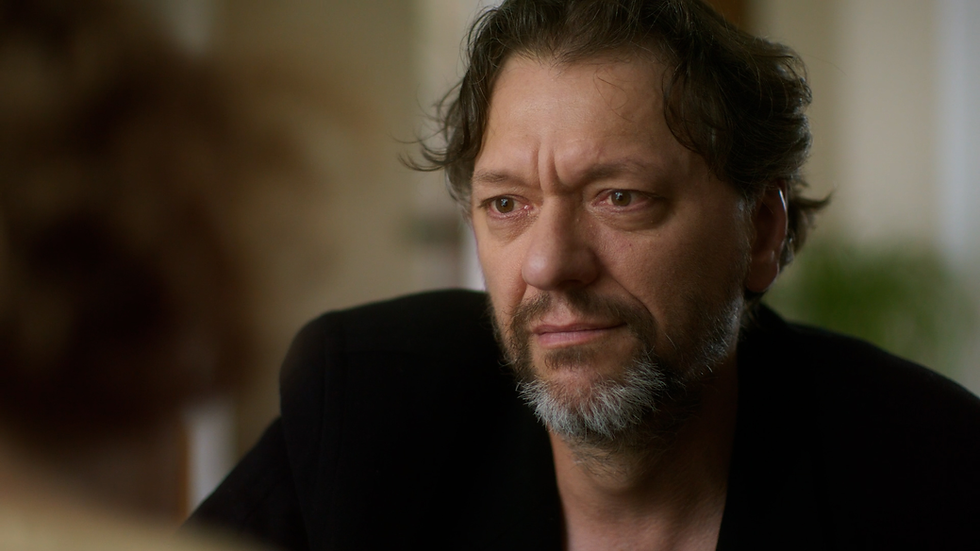
Stalin Boys, dir. Ora DeKornfeld, Bianca Giaever

Four Mexican-American boys from Middle-of-Nowhere, Texas play-acting as Josef Stalin and his inner circle. On paper, the premise doesn’t sound like much of a knee-slapper, but directors Ora DeKornfield and Bianca Giaever make these young boys’ curious historical hyperfixation endearing.
Throughout the short, our titular Stalin Boys (Malachi, Jurem, Cayden, and Lyric) workshop their play about the Stalinist purges for their regional Texas branch of National History Day. The competition allows students to pick a topic of interest from history relating to a prompt, thoroughly research, and choose from several mediums such as film, exhibit, or performance through which they give their final presentation in front of a panel of judges. The boys rehearse with their teachers and practice mock Q&A’s, but in talking head segments, the teachers confess their misgivings on the dark, complex topic and the boys’ ability to handle it. When Cayden asks if Marx was a good or bad guy, one of the history fair coaches defaults to explaining that history is not always black and white, so he will give the students all the facts and they can ‘decide for [themselves]’. The fact that the students are still young enough to think of history in ‘good guys and bad guys’ does give credence to one teacher’s concerns: “Where are [they] going with this?”
Although it teases the nuanced and murky history of the Soviet Union, the short focuses mostly on the boys having fun engaging with history and the process of preparing for the competition. Rehearsals go off the rails. The friends run around shooting each other with Nerf guns while yelling in their silly Russian accents. The too-tall backdrop for their performance gets stuck against the ceiling when they bring it into the room. The directors have found plenty of humorous moments to remind us that our subjects are still children learning how to exist in the world.

Malachi, the ringleader of the group and the actor playing Stalin, has a pre-existing hyperfixation with WWII. An interview with the superintendent describes Malachi as a charismatic and persuasive figure, and at one point, the head coach accidentally calls him Stalin. Malachi draws further parallels between himself and the infamous ruler, particularly their respective strained relationships with abusive fathers. He freely points out that Stalin’s methods were brutal and calls him a bully, but also confesses that portraying the imposing figure makes him feel powerful and in control of his otherwise powerless life. The film stops short of deciding if he and his comrades (pun intended) see Stalin as merely fascinating or actively aspirational.
Stalin’s global infamy appeals to our four small-town boys, who worry about being unimportant and forgotten. However, they must also confront the fact that said infamy came from Stalin’s many, many crimes against his countrymen, and specifically in this case, the ruthless persecution of political enemies. Texas History Day requires the students include thematic ties to modern day issues in their presentation, and during one of their rehearsals, their coach asks the boys to imagine if they and their families were rounded up and imprisoned for no reason. There is a pregnant pause and the camera focuses on Malachi, a Mexican-American boy in 2025. Does he make the connection between the gulags and modern day ICE detention centers? If he does make the connection, does he care, or is he too dazzled by the mythic dictator? The film doesn’t stop to investigate this thread, and in its defense, investigating this historical parallel would require a more serious short surrounding it, full of other comparisons to present day America, its government, and its impact on the people living through it. The filmmakers chose to tell a more lighthearted story focused on the boys and the school project they have fun producing instead.

The Stalin Boys do not advance to the next round of the competition. Their coach reads off some of the winning topics (Lunch counter protests, women's suffrage); all violent, difficult times for the country. However, American history classes can launder these topics into sanitized narratives which portray the United States as flawed but ultimately fixable. Most US schools gloss over non-American history in broad strokes, and most don’t touch on the bloody history of the Soviet Union at all, besides a general ‘communism bad’ mention. The film only shows snippets of the other contestants, but viewers may wonder: did the boys miss the cut because they were too sloppy in their delivery, or because they want to explore a complicated truth that made the adults around them too uncomfortable?
(Full Disclosure: The reviewer herself participated in her own regional National History Day competition, coming in 2nd place and advancing to States with her astounding one woman performance about the Actors’ Equity Strike of 1919. Needless to say, it did involve singing.)
Review by: Kylie Corcoran


Comments