
ShortStick's Top 75 Short Films of 2025

Updated: Jan 23

Here at ShortStick, there is nothing we love to do more than make lists. Over the past few years we have experimented with different formats to highlight what we feel are our favourite shorts of the year including our "ShortStick Picks." This year we settled on curating our Top 75 favourite shorts of the year. This list was made with a lot of love. After seeing well over a thousand short films between the four of us this year, it is a mix of the best awards contenders and festival favourites, ranging in every genre from animated to documentary, horror to comedy, drama to experimental and more.
We feel this list encompasses our taste as lovers of the shorts format. Keep in mind, just because a short doesn't make our list doesn't mean we don't think it's great. There were many films that made our individual end-of-year lists but not this list as whole.
With short films having a long release period that sometimes spans years, there are also several in this awards season that would have made our list, but were considered to us as 2024 films (Jane Austen's Period Drama, Bad Hostage, Perfectly a Strangeness and Passarinho - we're looking at you). So what did a 2025 film mean to us? We used the Oscar qualifying window of September 2024 - September 2025. If it was a film that came into our conscious during that time period we considered it valid for our list.
Although the order of this list is highly debatable among us (and mostly irrelevant because we truly love all these films), we will be counting down 15 films a day over the next 5 days until we reach our Number 1 short of the year. So check back each day to see our countdown.
We also created a montage video of all the shorts on this list (not ordered). If you're okay with spoilers as to which films made our list, have a watch below. And without further ado, lets kick it off with our video and short 75.

Directed by: Kate McCarthy
"The Hicks Happy Hour is an impeccably crafted gem. There are so many elements that give it an authentic 70s look and feel, starting with production designer Yun Gu and costume designer Sofi Kaufman. It’s all in the fine details: The Hicks Happy Hour lunch box, the corded phone, the pink sequined costumes of Babby & Cherie Olson, Jill's blue frilly ruffled blouse and vest. The whole set is everything you imagine the 70s to be. The music by Simon Hanes falls in line , only enhancing that feel right from the opening number. It’s easy to forget you are watching originally written music and not actual snippets taken from a 70s variety show. Casting Director Lisa Zambetti does a fantastic job piecing the Hicks family together. The kids are extremely believable as both child performers and siblings and nothing feels forced. "
See our full review here: https://www.shortstickfilms.com/post/2025-tribeca-review-roundup-part-2

Directed by: Kwesi Jones
The director Kwesi Jones crafts a satiric short film about an erotic adaptation of the Shakespeare classic Othello. Playing with the racial tropes, particularly the ones that sexualize black men, Jones extracts a marvelous performance by Jaylen Eashmond, who provides an emotional acting that delivers confidence, sexuality, and discomfort. Hence, the film is a throwback to the 1970s and 1980s small studios pornos, while joking about the adult film production industry, white people's sexualizing black bodies, and the lack of opportunities for Black performers, who subject themselves to productions like this.

Directed by: Chelsie Pennello
Cherry-Colored Funk tells the tale of the serial grifter Roberto Ferrari’s (Michael Tow) latest endeavor; opening a “genuine” Italian ice and gelati shop which he claims sports a healthy “93% profit margin!”. It is a fast paced, intense story that gets messier with every second that passes. Rich in scenic detail and gorgeously paired with an equally intense soundtrack, it echoes the pulse of the likes of Uncut Gems or Shiva Baby. Love it or hate it, the vibes are undeniable and we have landed firmly in the love it camp.
Watch here: https://www.youtube.com/watch?v=g62BMgoKAy4

Directed by: Shane Chung
Two headstrong Koreans can't agree on who's treating who to dinner, causing their KBBQ outing to spiral into a martial arts deathmatch (“One will pay the bill…the other will pay with his life!” promises the tagline). Check Please is heavily influenced by schlocky, zany, stunt-filled action comedy and martial arts films (Jackie Chan, Stephen Chow) and uses the action genre to trick the audience into sitting with a movie that talks about a more personal theme: the "in-betweenness" of holding a Korean-American identity and questions about belonging and representation: what is “Koreanness”? Is it innate? Can you gain or lose it? After its ecstatic reactions at Palm Springs 2025, Chung is currently developing Check Please into a feature-length film.

Directed by: Brandon Tauszik
During a late '90s TV Guide channel broadcast, an uptight cable company CEO fights off deranged hackers as they hijack her station, changing its content in real time. A satire of the violence imbued in American consumer culture—the wacky show titles include “Honey I Shrunk My Ass,” “Doritos Presents: The News,” and “Super Sexy Celebrity Funerals.” Filmed on a vintage Betacam, with a reprogrammed original Prevue Channel software and a Commodore Amiga emulator used to create the visuals (apparently the only film ever to be submitted to international film festivals in low-res 480p), Channelvue takes us back to the nostalgic 1990s and the TV guide that accompanied the day’s broadcasts
Watch here: https://vimeo.com/1128909278

Directed by: Romina Cenisio
A border is usually a liminal space but in Red Sands it is the destination. On the notorious border of El Paso, Texas and Juárez, Mexico, an off-road culture thrives in the dunes of the Chihuahuan desert. The Mexican-American population here navigate cultural legacy by forging identity in the desert, finding solace through off-roading, using the red desert dunes as a canvas to imprint their unique identities. The film, a World Premiere at SXSW, follows characters from the past and present reflecting on their journey while danger looms on the horizon. Red Sands pulls the viewer into an exhilarating never-before-seen world with some of the best documentary photography of the year (that final shot!), highlighting resilience and beauty in a place mostly unknown to outsiders.

Directed by: Charissa Kroeger
“Spaghetti’s intricate canvas keeps expanding to include more and more intriguingly unique people, including twin cowgirls, a group of folks with suspiciously elaborate mustaches, a masked luchador wrestler, a lady who is purple for some reason, and a hirsute muscle daddy in an incredibly low-cut SPAGHETTI emblazoned tank top (it’s the titular role!). The packed frames of film, overflowing with people becomes like a filmic Where’s Waldo?, with mountains of details keeping viewer’s eyes darting from side to side, and top to bottom, to take in all the details, not wanting to miss a single devious costume or choreographed movement.”

Directed by: Sanaa El Alaoui
In Aicha, Sanaa El Alaoui creates a film about misogyny and violence against women in Morocco, while she comments on colonialism, art as a tool of freedom, and generational trauma. Throughout the wounds of the rituals, El Alaoui questions the past and the present of her country. At the same time, the beautiful imagery intrigues the audience to watch a film about trauma and violence, but invites us to pay attention to the new generation of anti-colonial and the third-world filmmaking.
Listen to our interview with the director Sanaa El Alaoui:

Directed by: Elizabeth Rao
The Truck is a short film written and directed by Elizabeth Rao, in which we follow the young couple Jo (Shirley Chen) and Arash (Daniel Zolghadri) as they attempt to buy the morning-after pill in their small town, following a night of young exploration. As to be expected in post-Roe v. Wade America, reproductive rights and the lack of medical support quickly come into question, as the hours drag on the couple grow increasingly desperate for a solution. It is a sombering and harrowing look at just how real the impact of the political decisions are for people, and how easy it is for a situation to go from bad to worse in the process.
Watch here: https://vimeo.com/1133479903

Directed by: Ben Rekhi
The Other Side Academy is a Salt Lake City Addiction Recovery Program with a higher-than-average success rate, where participants pay with work and commitment, premiering sustainable change over short-term rehab. In Ben Rekhi’s documentary we see the ins and outs of the program, focused around the executive director Dave Durocher who recovered after spending close to 30 years in and out of prison. Offering hope to those who have hit rock bottom, the staff demand complete commitment from the program participants, down to what might appear to be insignificant details, in order to show everyone from the viewers to the addicts that there is always a way out for those willing to fight for it. It is an unpolished look at the work it takes, showing us both successes and failures of the program without excuses.

Directed by: Jessie Komitor
Melissa and Stephanie fantasize about becoming downtown "IT" girls, but their dreams come crashing down on them when the photographer they idolize is the one to lift the veil, taking a hard left turn from light musical comedy into heavy drama. Thie comedy-drama film premiered in Tribeca Shorts: NY Off Peak and was also a festival favourite at Palm Springs and Hollyshorts festivals. Chasing the Party is based on Komitor’s personal experience of being a young suburban kid enraptured by the underground party scene of the Lower East Side in the early 2000s, and how partygoers trade childlike fantasies and wonder for the cold hard reality of experience, remembering an indie scene that was as cruelly fleeting as Komitor’s young adoration of it.

Directed by: Christina Chironna
Christina Chironna’s directorial debut When Everything Was Blue features a collection of home video style footage which is so convincing in its framing that I genuinely saw it as a documentary during my first viewing. It follows a family where the father was a first responder during the 9/11 terrorist attacks, told from the perspective of the aftermath of the attack and the health issues that arose from being present on site amidst the debris. With the clips often focused on the children in the family, it gives off a wholesome facade of heartwarming scenes as we watch them grow up. Brewing in the background however is a whole other story, one of the shortcomings of the American hospital system and the lack of support returned to those who gave theirs without hesitation. When Everything was Blue stands out as one of the most creative, clever and hard-hitting shorts of the year.
Watch here: https://www.youtube.com/watch?v=t9hx8IO5Ujw

Directed by: Mungo Thomson
This fifteenth part of an ongoing suite of stop-motion animations is composed of thousands of still images of candles sourced from reference books and visual encyclopedias, using over 1,000 candle images from encyclopedias to represent time passing, blending motion and stillness. Thomson pilfered from books on candles and candle-making, home decor and entertaining, and religion and magic, and behind-the-scenes books on the making of Barry Lyndon, Game of Thrones, and other dramas set before the advent of electricity. Watching these printed candles burn down is a fascinating look at temporary space, creating a work of art both momentous and momentary out of something as ephemeral as a candle.

Directed by: David C. Roberts
Inspired in part by films like Los Angeles Plays Itself, and The Green Fog, Roberts created a collage of clips from movies everybody and their mother has seen (Taxi Driver, Dog Day Afternoon, Dressed to Kill, Midnight Cowboy, The Warriors), distilling the visual rushes of a score of 1970s and early ’80s New York City-set film classics into a 15-minute city symphony. Steam pouring from manhole covers, the neon-lights of 42nd street seen through rain-streaked taxicab windows, phalanxes of cops spied from tenement rooftops as they sweep a city block come together in an exciting and surprisingly moving vision of 70s grime, location shooting, exploitation cinema and New York City.
Watch now on HBO Max and Amazon Prime

Directed by: Rebeka Bizubová
"Bizubová screams out the pain she shelved for five years and delivers a confession, not hers, but from her abuser, who, through the confrontation, acknowledges his misconduct. Thus, the film is a memorable example of documentary filmmaking that seeks to expose and elicit a response to the wrongdoings of someone in a position of power in society."
Full review here: https://www.shortstickfilms.com/post/copy-of-2025-student-academy-award-winners-series-part-7-confession

Directed by: Aaron Blaise
Aaron Blaise is a legend in the animation industry, having worked on some of the most recognizable animation films in history from Mulan to Aladdin to The Lion King to Beauty and The Beast. He is also the director of Oscar-nominated Brother Bear. Aaron Blaise spent 3 years masterfully crafting Snow Bear, a story inspired by his wife's passing from cancer, bringing a story that is sure to make you feel all the emotions before melting your heart. Snow Bear offers the best hand drawn animation of the year and has amassed almost 3 million views on Youtube making it one of the most watched (if not the most) short films of the year and more than worthy of a spot on our favourite short films of the year!
Watch here: https://www.youtube.com/watch?v=xOXolSQcEb4
Listen to our interview with Aaron Blaise here: https://open.spotify.com/episode/6yCx2vjs69c96iFv3JFiou?si=34466396f2cb4ebe

Directed by: Zefan Wang
“Zefan deftly handles the heavy subject matter of the deterioration of a relationship, but executes it with a deliciously light touch, leavening even the most emotional scenes with a brisk liveliness, all leading up to a gasp-worthy fourth wall break where imagination and reality collide. We know the breakup is coming from the beginning of the film, but thanks to the emotional undercurrent running through Kubrick, Like I Love You and the performances of the young couple at its heart, it still hits hard, earning the emotional catharsis that it brings.”
Full review: https://www.shortstickfilms.com/post/2025-student-academy-award-winners-series-part-1-kubrick-like-i-love-you

Directed by: John Hollands
Two rival Canadian cyclists, one anglophone and the other francophone, face off in a fierce race across the country! From St John’s to Vancouver. Pulling its delirious inspiration from the greats of Winnipeg cinema like Guy Maddin (Brand Upon the Brain!) and Matthew Rankin (The Twentieth Century), who narrates this cross-country skirmish, Hollands blends deadpan absurdity with a knack for visual ingenuity—cut and paste collages, double exposures, fake newsreels, intertitles, and a heady mix of other insane style add-ons—to craft a film that is uniquely his own. Through a playful mix of archival footage, animation, rear projection, and more decapitated fish than you might expect, Hollands jams in more local references and in-jokes than one viewing could possibly reveal. Le Tour De Canada is about as Canadian as it gets!

Directed by: Meyer Levinson-Blount
Butcher’s Stain is the well deserved student academy award silver medalist of 2025, from emerging filmmaker Meyer Levinson-Blount who not only directs but also acts in this film. The film takes place in a Tel Aviv supermarket, post-October 7th attacks where someone has been tearing down posters of the hostages in the staff breakroom. Tension builds as the senior staff attempts to handle the delicate situation. With a creatively formulated script it cautions against racism and hate against Arabs in Israeli society.

Directed by: Faranak Sahafian
Writer director Faranak Sahafian brought us the live action drama Kisses and Bullets, in which we follow two separate but parallel stories of Iranian women attending protests in their respective countries of Iran and the US. Connected through a photo on social media, the two stories find similarities despite physically being worlds apart. Growing increasingly relevant to this day, it is political in its messaging but focused on love and humanity, showing that it is still possible for beauty to grow amidst the chaos.
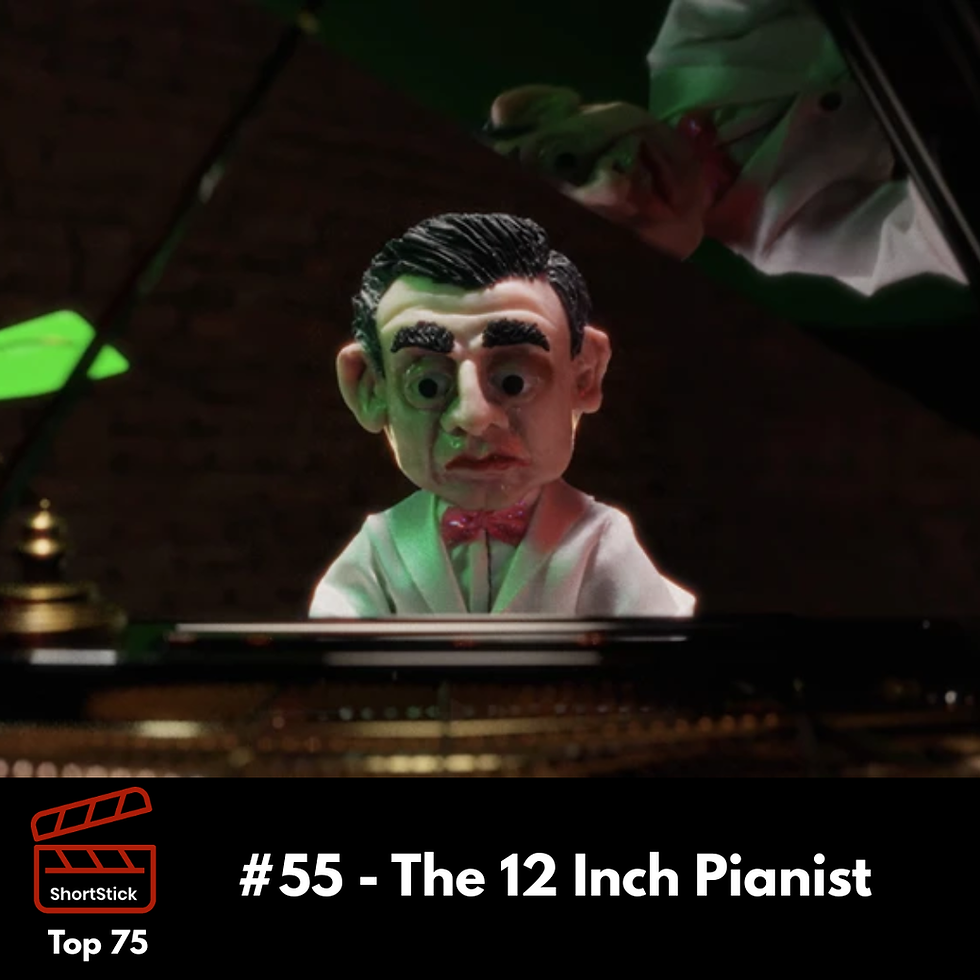
Directed by: Lucas Ansel
Lucas Ansel's short film is centered around a classic joke involving a bar, a genie with a hearing problem, and a miniature pianist. Ansel, a student at the Rhode Island School of Design, created this as his senior film, drawing inspiration from Simon Rich's short story "Guy Walks Into a Bar," published in The New Yorker in 2013. Narratively, the film builds to the expected punchline, but what follows in its wake is where the film subverts those expectations.. Ansel's direction demonstrates great strength in adaptation, staying close to the source material while also making strong directorial choices in the transition to screen. The 12 Inch Pianist won silver at this years Student Academy Awards.
Full review here: https://www.shortstickfilms.com/post/2025-student-academy-award-winners-series-part-4-the-12-inch-pianist

Directed by: Raphaël Jouzeau
The ex-couple Gaspard and Leïla meet in a crowded bar, a month after Leïla left Gaspard. Clearly still in love with her, Gaspard does his best attempt at finding a way to patch things up. As he slowly realizes that the attempts are in vain, the conversation and visuals take a turn as Gaspard seeks refuge under the tablecloth. It is a familiar story of heartbreak, paired with surrealist visuals that in the context feels somehow equally relatable. Whatever the reason might be, if you ever found yourself on either side of a nonmutual breakup there is a melancholic sense of comfort to be found in this delicately crafted story.

Directed by: Pierre-Luc Granjon
“Like a series of charcoal drawings torn out of a lost-and-found spooky children’s book, Pierre-Luc Granjon’s The Night Boots takes viewers on an adventurous journey through dark woods. The realistically detailed backgrounds mix with incredibly exaggerated stylized characters to create a play of light and shadow that not only frightens but also shows the power of bravery and friendship… The Night Boots is not the terrifying quest it seems like at first glance, but instead is something like a chiaroscuro Where the Wild Things Are, a world where monsters are friends, and the full moon lights the path wherever you wander.”
Full review: https://www.shortstickfilms.com/post/ottawa-international-animation-festival-review-roundup
Watch here: https://vimeo.com/1151536013

Directed by: Gerardo Coello Escalante, Amandine Thomas
“Despite their age differences, they represent the equivalent parasitic nature of Mexican tourism and how it affects the local lives. Visually, the directors portray a young girl offering roses in the bar. Again, she should be playing and enjoying the experiences of childhood, but the wealth gap requires her to help at home. The duo frames the sadness and understanding of that young girl, and the cut back to Susana implies her comprehension of her wrongdoings in the tourism industry.
Overall, in this second effort of a trilogy, the directors tackle the difficult balance of tourism and cultural oppression as well as the ongoing heavy gentrification of Mexico City. They also encapsulate the solitude of an older woman who finds comfort in the city's beauty.”
Full review here: https://www.shortstickfilms.com/post/2025-palm-springs-international-shortfest-award-winners-review-roundup
Watch here: https://www.youtube.com/watch?v=i6oBXfcGdTQ

Directed by: Blake Jarvis
Two mentally ill girls regret joining a cult in the hysterically unhinged In Jeff We Trust, but they find their regret might have come too late. Sydney Heller and Olivia DeLaurentis, as Pelvis Nebula and Rib Quasar (the names make much more sense in context… sort of) are riotously funny, and starting with its deliciously silly premise on down, Jeff is packed with more jokes, gags, puns and laughs than anything else we saw this year. The disdain that young people hold for having to make decisions is a running joke that feels all too relatable in a world where every day can be overwhelming.

Directed by: Daphné Hérétakis
The loose form and the ever-changing tone What We Ask of a Statue is That It Doesn’t Move re-imagines Agnès Varda’s 1984 film Les Dites Cariatides, relocating its investigation into local statues from Paris to Athens. This equally poetical and political manifesto uses a wide range of styles, drawing from documentary filmmaking, essay writing, street interviews, and even musicals to question our relationship to the past and how it can weigh us down, with a great deal of humor and no deference. What We Ask of a Statue is That It Doesn’t Move zips from statues to the Parthenon, from the Parthenon to the streets, and from the past to the present, shining a harsh light on a country’s rut and, more broadly speaking, that of our contemporary societies, questioning the meaning of art, heritage, and political action.

Directed by:Irving Serrano, Víctor Rejón
"From the opening seconds of Victor Rejón’s and Irving Serrano’s Voices of the Abyss, you can tell you're in for nothing short of a spectacular visual feast. Shot in gorgeous black and white, you watch waves crash against the shore as you're introduced to “The Abyss”, a seven-meter wide channel that cuts into the cliffs of La Quebrada. Voices from the Abyss is everything you want out of a documentary. It’s informative, it thrills, and its beautifully shot. I promise it’s a short you won’t regret diving into. "
Full review here: https://www.shortstickfilms.com/post/21st-hollyshorts-film-festival-review-roundup-part-2

Directed by: Alexander Saul
A jewish convert named Adam (Louis Bodnia Andersen), has as an adult made the decision to get circumcised to get closer to his god - or something along those lines. Travelling there accompanied by his father, Adam seems very unsure about his decision and the reasoning for doing it in the first place. Nevertheless he perseveres, only to be met with a doctor whose idea of calming down the situation seems to be making jokes at his expense. The film pairs political commentary with the absurd situation of an adult man walking into what is essentially a children's clinic for circumcision which builds a very addictive and strange kind of tension, it feels almost like you want to look away yet laugh while doing so.
Full review here: https://www.shortstickfilms.com/post/21st-hollyshorts-film-festival-review-roundup-part-1

Directed by: Arnold T. Rice
In Friday is Mushroom Soup we follow the carer Kate (Katy Trevor) as she visits her favourite cranky client Doug (David Sterne) on a seemingly routine day of work. The pair has a friendly banter going from the second she steps through the front door, rushing back and forth through the flat trying to catch up with a seemingly impossible list of todo’s. But it turns out this is far from a normal day, as Doug has some unexpected news to share. The film is an ode to our often overlooked elderly carers, the true heroes of the years. It walks the fine line between sorrow and love, showing the immense value of human connection in the time of need.

Directed by: Gabriel Motta
“Consequently, the director studies the supernatural forces that suddenly interfere in the family's business. First of all, the film takes place in two central scenarios: the church and the home. In this sense, the production design creates props that employ an allegorical and horrific milieu in the film. The title object, a lace veil, is the vehicle for the miraculous communication between the pastor's son and the unliving. Yet, Motta utilizes this veil of lies to symbolize the result of their wrongdoings, when it covers the outcome of the incident. The same object symbolizes life and death, and the director graphically implies this through a tense scene of human despair and guilt. Besides the obvious violent disposal, the detailed frame of the eyes of Rafaela Lima showcases a true horror spectacle, brought on by the necessity of lying and profiting off of someone else's faith.”

Directed by Alexander Thompson
A fable set in the 1930s in a world inhabited by mythical creatures, where we follow a mother and daughter as they head out on a formative journey of hunting for the daughter’s first catch. Gorgeously shot in black and white, the detailed VFX and soundwork sprinkled throughout results in a rich worldbuilding that you quickly find yourself lost in. In juxtaposition to the grandiose setting we find the heart of the story grounded in a relatable tale of parenthood and maturing into adulthood. The result is a film you quickly find yourself pulled deeply into, only to leave you wanting to see more.

Directed by Rich Williamson
A hit at this year’s tiff, Rich Williamson’s comedy brings us a unit of dedicated online bots that scheme chaos and divisiveness from their office desks. Bots is a wickedly humorous and sharp satirical take on the absurd amount of power relinquished to the unhinged forces steering world politics, with these “useful idiots” touching on everything from COVID, to Russia and beyond. Every time you think the story is too wild to be believable, you remember that real life is so much stranger (“In Springfield, they’re eating the dogs”); Bots is like most uncomfortable and prescient episode of Black Mirror ever made.
Watch here: https://vimeo.com/1139845543

Directed by Nicolas Gourault
In Their Eyes, Nicholas Gourault's Directorial Work, the director utilizes the geolocalization system to examine how colonization operates in the digital era. Throughout the excerpts of micro-workers from the Global South, we learn how machines get their training to navigate the Global North. Essentially, the centuries of exploitation continue throughout the AI era, where corporations pay a fraction of the wage for cheap labor, while training their machines that are going to steal people's jobs, and still make billions for their companies. The distortion and gritty visuals of the digital aspect deliver a fascinating look at an engaging and politically charged documentary.

Directed by Whammy Alcazaren
“Rogue director Whammy Alcazaren’s uses his low-budget inventiveness and cross-media anything-goes ethos to find a restless innovative atmosphere that keeps Water Sports moving through a deranged collection hybrid formats, with collaged cutouts of storybook pictures, VHS static, inventively handmade-looking visual effects, deliriously bold filmmaking choices (one camera shot through heart-shaped hands seems inspired by Agnès Varda), and more sweaty butts onscreen than anything since Mektoub, My Love… Alcazaren packs more themes, ideas, and images (a dance off! a musical number!) into Water Sports’ tight 19-minute runtime than most directors could fit in a feature film.”

Directed by Lilli Carré
Ecstatically moving and brightly painted formless figures haunt recent black-and-white Xeroxed images of hollowed-out public spaces, hallways, a basketball court, church pews, expressing a helpless, anxious energy felt in our current moment. They become displaced from their locations, as their environments dissolve and their printed record evaporates. Carré’s signature loose, figurative animation style uses frenetic movements and frantic gestures to reveal a deeper feeling of alienation and evacuation in our era of social, political and ecological crises. A film of addition and subtraction, blurs of colour pulsing through Evacuations vanish as quickly as they appear, without a trace.

Directed by Ali Cook
Half-British historical drama, half-folk mystery, The Pearl Comb transports you to 1893 Cornwall. World-building in a short is perhaps one of the most difficult feats to accomplish. Director/writer Ali Cook makes it look easy. He seamlessly crafts a world full of mystery and mythology centered around a fisherman's wife, Betty Lutey (Beatie Edney) who has miraculously cured someone of tuberculosis. The Pearl Comb is elevated by its exquisite craftsmanship. The costume design by Constance Woods, production design by Isabel Pirillo, and the entire makeup and VFX teams work together to realistically depict what life was like in the late 1800’s along the shoreline of Cornwall. Without these elements, no matter how good the writing is, the fantasy aspects of this short could have easily fallen flat.
Watch on Disney+ in select territories

Directed by Fiona Obertinca
Dandelion is a short I was glued to and invested in right from the opening title card (pictured above), a young girl running with a tithe box, being chased by nuns and giving the sign of the cross before flipping them off. Taking place in 1972 Los Angeles, we find out this queer, rebellious teenager's name is Margaret, who is now kicked out of yet another foster placement and is in need of a new foster home. She is paired with Joyce, a volunteer who has to find her a new home before dawn. Dandelion's screenplay is a perfect balance of wit and emotion, and is anchored by two of the best performances of the year in Vic Michaelis as Joyce and Ava Lalezarzadeh. Ava in particular is an absolute star. Readers of this site may remember her from last year's Oscar-contender In The Garden of Tulips. Dandelion also has one of the best colour palettes of the year, from the dandelion-patterned band-aid, to Joyce's clothing, to the old "death-trap" Ford Pinto, every choice feels brilliantly warm and well thought-out. Shoutout to the production design team too who really nailed the 70s look.

Directed by Kevin Walker, Irene Zahariadis
An enigmatically filmed connection to the deceased, both physically and metaphysically, Things Hidden Since the Foundation of the World is a deeply personal account of a cultural tradition from a small Greek island, Nisyros. Walker and Zahariadis dramatize the local custom of exhuming the bodies of ancestors to make space for the newly deceased. A favourite at the 2026 New Directors/New Films festival, Things Hidden Since the Foundation of the World is an enigmatic documentary-fiction hybrid sprinkled with a light use of archive footage, never making it clear what is imaginary and what is “real.”

Directed by Chris Lavis, Maciek Szczerbowski
“In The Girl Who Cried Pearls, Oscar-nominated filmmakers Chris Lavis and Maciek Szczerbowski (Madame Tutli-Putli, 2007) craft a tale of the endless greed of men and the mysterious working of the divine. The Girl Who Cried Pearls reminds us that it’s the story behind something that gives it a value, not the object itself. In a present-day castle full of elegant crystal glassware, beautifully ornate furniture, and glittering jewelry, a young girl and her Grandfather (voiced by Canadian treasure Colm Feore) wonder, of all of the treasures in the room, which is the most precious?”
Full review: https://www.shortstickfilms.com/post/ottawa-international-animation-festival-review-roundup

Directed by McKinley Benson
Two Ships is a story written by Mackenzie and McKinley Benson, depicting the daily routines of a couple living together. The film opens up on a slow pan into the apartment of the couple where they lay sound asleep. Suddenly a flash appears from the wristwatch of one of them, subtly indicating that the time has come to start the “morning” routine. The pair has completely opposite schedules, so despite sharing a home their physical interactions are limited. To illustrate this the writers here let the two normally separate timeframes overlap in the same scenes, using sunlight or darkness as a mechanic for a makeshift split screen. While clearly saddened by their lack of true intimacy, it is really beautiful to see how a connection can be built on fleeting moments of interaction, and how chores turn into loving acts of service for one another, as they both long for the weekend when they get to spend real time together.
Full review: https://www.shortstickfilms.com/post/21st-hollyshorts-film-festival-review-roundup-part-4

Directed by Kaitlyn Mikayla
“At the same time, the film is also about an unconventional family. A deaf child living in a trailer with her womanizing father, who is notably having an affair with the clerk. Ragamuffin is about the non-conformity and the diverse nature of each individual. One of those examples is how Ryan constantly falls when trying to race with the dirtbike, surprising everyone who believes she is a natural rider because of her father. Consequently, each individual is their own. The beauty of the film is in the details of the rambling mind of a twelve-year-old girl. Additionally, the cinematography work by Jared Bedrejo provides the texture to the dirty look of the track and the dust of each curve, object, and trailer parked around them. Shooting it on film adds a visual personality that impresses for a first-time directing of a short film, and goes well with the scenario in which the film is set.”
Full review: https://www.shortstickfilms.com/post/21st-hollyshorts-film-festival-review-roundup-part-2

Directed by Joshua Seftel
All The Empty Rooms follows Steve Hartman on his seven-year long project with photographer Lou Bopp to capture the empty bedrooms of children killed in school shootings across America. Seftel and Hartman show tremendous restraint in telling the stories of these children. They never stray away from the heart of healing. They allow a portrait of the children and their innocence to be shown and the parents a moment to heal. Never once is a shooters name said and revealed, giving all the power to the victim and no voice to the evil that committed the act. All The Empty Rooms excels at using show not tell filmmaking. The short doesn’t allow for any solution or political debate on the issue because when you are shining a light on these kids, it would only take away from the project and mission.
Full review: https://www.shortstickfilms.com/post/documentary-short-shortlist-predictions-for-the-98th-academy-awards Watch now on Netflix

Directed by Luke Angus
Solstice shows a lonely Inuit named Tulok suffering through a seemingly endless summer daylight only to be united with their lost beloved partner Yuka with the help of a starry night sky. This is a film suitable for young audiences that packs a punch right in the feels for adult watchers. It teaches us to cherish the time we have with our loved ones, and value the memory of them with joy instead of sorrow. Stylistically the film is reminiscent of golden age Pixar, with sparse but highly detailed surroundings and beauty in each frame.

Directed by Arvin Belarmino, Kyla Romero
The name Agapito means “beloved” or “lovable”. Although this is the name of the bowling alley (Agapito Duckpin Bowling Center), it is also the very heartbeat of the short and the community of workers employed there. It’s clear from the beginning, whether it is dealing with an angry patron who is refusing to leave, helping with end-of-day cleaning tasks, or hosting Junior, this is a community of found family who have each other's backs. Overall, Agapito is a mesmerizing ode to the power of community and shows the value of having a found family that will bandage you up on your hard days and make you feel beloved.

Directed by Charles Barratt
Writer director Charles Chen Barratt brings us a masterclass in restraint in his brooding drama Century Egg. We follow Daniel (Justin Chien) as he returns to his childhood city in Taiwan, a place he left behind decades ago as his parents separated and he moved with his mother to America. While wandering the streets he runs into a stranger by the name of Xiao An (Chien-Ho Wu) who starts to quiz him on his history and plans for the trip. It is a film about the weight that our spaces and stories carry with them, about not having all the answers and finding acceptance in that. It allows each take to breathe and stretch its legs, giving the story an impact that lasts far longer than the scenes themselves.
Full review: https://www.shortstickfilms.com/post/2025-palm-springs-international-shortfest-review-roundup-part-2
Watch here: https://www.youtube.com/watch?v=QjysXs-Jp0E

Directed by Alexander Molochnikov
Extremist is inspired by the true story of Sasha Skochilenko, a Russian artist and musician who was arrested and imprisoned for seven years for replacing four price tags with anti-war messages. Extremist gives a portrait of defiance through art as it tells a story that is equally joyous in it's romance and chilling in its consequences. It remains all too relevant here in North America as well as governments continue to use violence to silence people speaking truth and speaking out for freedom.
Watch here: https://www.youtube.com/watch?v=mmYbsjeY4Qo

Directed by Lee Knight
Alistair Nwachukwu marks himself as an actor to keep an eye on; he absolutely shines in this role. He brings energy to a subtle and endearing performance, perfectly matching the charm of Miriam Margolyes, who many will recognize as the actress who plays Professor Sprout in the Harry Potter movies. The screenplay by director Lee Knight does this short a lot of favours. Rather than falling into the potential pitfall of coming across as cheesy or trite, Knight injects charm into the words of Dorothy at every corner. A Friend of Dorothy keeps a smile on your face and your heart swelling, begging for the sweet moments of friendship to last. The cinematography by Vanessa Whyte acts as a portrait of both actors. She does an amazing job capturing the characters' expressions, like Dorothy's mischievous smile and the wonder in JJ’s eyes at the vast collection of plays on Dorothy's shelf.
Full review and interview here: https://www.shortstickfilms.com/post/interview-with-lee-knight-of-a-friend-of-dorothy
Availale on Disney + in select territories

Directed by Maryam Tafakory
“Daria’s Night Flowers creates an enthralling portrait of love and desire in Iranian cinema where depictions of intimacy are prohibited. Tafakory makes use of blurred-out blue filters and nature sounds, creating a pastoral beauty despite the ugliness of the repression in the story. Double exposures, superimpositions, on-screen handwriting, photos, book pages, and paintings cascade across the screen making Daria’s Night Flowers never less than enthralling to look at, its vibrant colours like one beautiful cyanotype after another.”

Directed by Christalyn Hampton, Geeta Gandbhir
In the wake of Roe v. Wade the tension is higher than ever when it comes to reproductive rights in the USA. While a lot of the news reporting for us on the outside looking in focuses on the legal and political impact, the effects in practice are much harder to comprehend. This film flips that around and puts the focus on the people fighting tooth and nail to provide healthcare within the constraints of the ever changing laws. We follow Tracy who works as a director of operations in an abortion clinic in Atlanta, Georgia, on a regular day of work for the heroes on the front lines. Facing everything from protesters to increasingly difficult laws surrounding abortion, the intensity of the already tough situation grows tenfold, as the staff risk not only their livelihood but their own safety to provide care for those who seek aid.
Watch now on HBO Max

Directed by John Kelly
For many people life is filled with I-should’s. An urge to do more, to be better, to explore, and a will to do so in the distant land of another day. In John Kelly’s retirement plan this theme is explored through the eyes of Ray (Domhnall Gleeson). Ray is somewhere in the middle of his life and overstimulated while simultaneously low in motivation. He dreams of his big retirement plan, of fitting multiple lifetimes worth of activities into those twilight years. As he dreams in a poem-like manner of voiceovers, we see his dreams come to life before us. The words flow so well as a standalone poem that you can close your eyes and listen, dreaming of your own version of the visuals and what they mean to you. It is a heartwarming, relatable story which reminds us to live today, not plan for tomorrow.
Full review and interview: https://www.shortstickfilms.com/post/interview-with-john-kelly-and-tara-lawall-of-retirement-plan
Watch here: https://www.youtube.com/watch?v=2Mqa4zfJdx4

Directed by Jessica J. Rowlands
Shot in Zimbabwe and anchored by an all-African cast and crew, RISE gives off a warm glow of energy. This is aided by not only the acting but also by its look and sound. The cinematography from DOP Jacques Naudé is impressive, especially in its use of lighting. No matter what time of day, whether it's boxing training against the backdrop of a sunrise, natural lighting through diner windows, a trickle of light through Coach’s hair as we stare up at him, or the dim lighting of a nighttime train ride, the subjects are always highlighted and in focus. RISE is not only a story about the compassionate work of boxing coach Tobias Mupfuti, but a heartfelt story of conquering your fears and not letting past hurt stop you from letting someone in, because who knows, they might just change your life as much as you have the ability to change theirs.
Full review here: https://www.shortstickfilms.com/post/2025-tribeca-review-roundup-part-1

Directed by Ibrahim Mursal
A Tribeca favourite this year is African Family Dinner. When a Norwegian woman meets her Ghanaian boyfriend’s family for the first time things quickly escalate into the most awkward dinner in history. Actress Mathilde Storm gives one of the most committed performances of the year, trying anything she can to fit in with the Ghanaian family, weaponizing her white guilt in way ways veering from overpronouncing names, to bringing unexpected guests, to the most uncomfortable “cultural” dance ever put on screen. Discomfort only grows throughout the runtime, constantly one upping itself on how awkward it can get—in the best possible way.
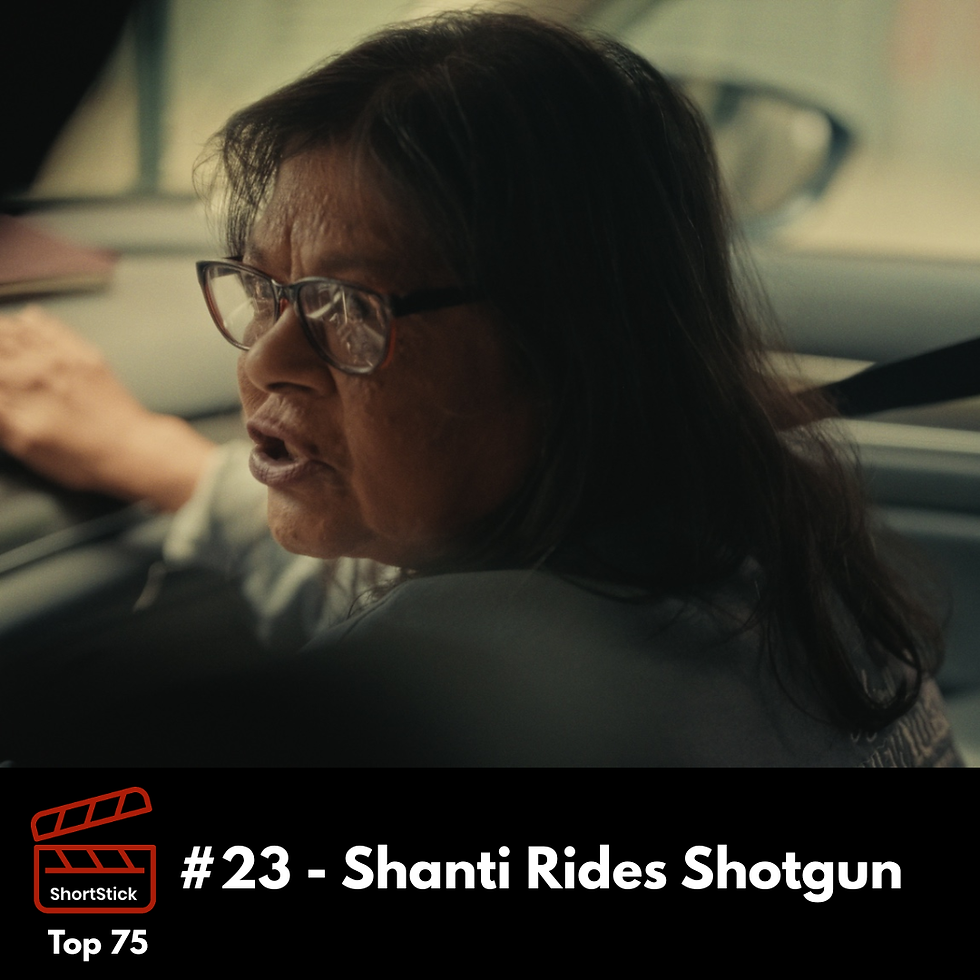
Directed by Charles Frank
Shanti is definitely someone you want by your side, riding shotgun. When one of her students asks “What is this guy doing?” while driving, Shanti replies from the passenger seat, “He’s a fucking asshole.” Shanti has no desire to keep things “professional” as she curses at anyone driving poorly around her students and even the “shitty ass road” itself. But that’s precisely what makes her so endearing. She is not only there as a driving instructor, but acts as a friend in the passenger seat as she instructs her student to “Go to Dunkin” and “get me some coffee before I die.” Shanti’s uncouth methods clearly work as her students over the past 30 years have a 99% pass rate. Overall, Shanti Rides Shotgun is a delightful documentary. Although it is just 8 minutes long I could watch hours of Shanti yelling at drivers on the NYC streets and helping her students on the road to success.

Directed by Brennan Robideaux
Director Brennan Robideaux covers the story of the titular Sarah “Sallie” Smith, an 80-year-old resident of Fairhope Alabama, as she battles not only terminal lung cancer but also the Alabama Power company and their mishandling of toxic waste. Sallie teams up with fellow Alabama grandmas Diane Thomas and Savan Wilson to form the Coal Ash Action Group, with a mission to convince the corporation to correctly manage their toxic waste before it leaks out into the group's beloved Mobile Bay. It is a story packed full of heart and soul, showing just how far you can get with a can-do-attitude and some good friends on your side.

Directed by Kim Blanck
Another of our Tribeca favourites this year was Gloria, the heartbreaking and hilarious story of a Chinese woman in her 70s living alone and struggling with her memory, who finds newfound purpose in teaching herself Spanish. Emily Kuroda, who got a shoutout at Tribeca as one of our favourite short film performances, finds the heart and soul of a woman alone in the city, makes us feel for her struggles and delivers lots of huge lighthearted laughs, too! Lovingly shot on film, Gloria fills its brief runtime with more feeling and nuance than most feature length films can manage.

Directed by Drew Dickler
In Big Bass we follow the filmmaker Drew Dickler as they embark on a journey to recount a childhood memory involving their gym teacher and the titular large plastic fish. While originating in a memory that seems surreal on the surface, the story itself unfolds to something very grounded and moving. It is a heartwarming story about humanity and support, showing us viewers how incredibly crucial the influence of the adults that surround us during our formative years can be, and the power that being openly queer can have on the people around you.

Directed by Klimovski
“ATTAGIRL! is the second short film by the mononymous director Klimovski, whose work blends the pulp aesthetics of 1970s exploitation films with an emotional grit, exploring where queerness, rage, and identity collide. ATTAGIRL! doubles down on Klimovski’s commitment to transgressive queer cinema—shattering the usual boundaries of queer characterization and narrative…It's a film that doesn't ask for space but takes it, by any means necessary. Klimovski flips the script on the “expected” at every chance, from the casting of queer and trans actors to the layer after gaudy layer of impeccable style.”

Directed by Tawfeek Barhom
Writer / director Tawfeek Barhom brings us a stark and poignant family drama in I'm Glad You're Dead Now. Tawfeek is also starring as Reda, one of two brothers - the other being Abu Rushd played by his real life brother Ashraf Barhom - who return to their childhood island where they are forced to confront the dark secrets of their past. Abu Rushd is suffering from dementia, which only serves to increase the mental pressure on Reda who not only has to live with his own memories but also constantly remind his brother of their history. It is a very restrained performance that plays its cards close to the chest, only to deliver a gut punch of a finale. I'm Glad You're Dead Now won the Palme D'or for short film which only adds to its prestige as one of the best short films this year.

Directed by Hilla Medalia
Silence speaks louder than words. Not only does this describe the movement of protesters in this documentary, holding up pictures of Palestinian children who have been killed in Israel's genocide against Palestine. But this also describes the film making style in a way as well. Children No More: Were and Are Gone is a mostly observational documentary as it observes the protests, the planning of their events and how those around the protesters react to their presence in public areas. The imagery of the seas of faces of children who no longer with us is powerful and heartwrenching and sure to stick with me for a long time.

Directed by Sarah Meyohas
In Sarah Meyohas' Medusa, the visual artist and filmmaker debates about consent, sexuality, and fetishes. Setting the story on a beach in the South of France, Meyohas provokes the audience with a straightforward approach to sex, questioning how we watch and interpret sex scenes on the big screen. Hence, the director seeks a dubious reaction, the multiple questionings, and no final answer, leading to an expanded thought of the situation of the lead character, and the experience she goes through. Thus, beneath the gorgeous cinematography shot on film and the beautifully composed scenery, Medusa is a provocation on sex, fetishes, and how audiences deal with the instigation throughout rough imagery.
Listen to our interview with director Sarah Meyohas here:

Directed by: Viktoria Schmid
A sequel of sorts to Schmid’s NYC RGB (a 2023 ShortStick Pick) Schmid’s simple but ingenious use of cinematic magic is running the same strip of film is run through the camera three times, each time using a different colour filter in front of the lens – red, green, and blue (the titular Rojo Žalia Blau). This time, she leaves behind the concrete jungle of New York, moving to the natural views of Spain, a Baltic Sea resort in Lithuania, and a forest in Lower Austria. As each beautifully grainy 16mm image is actually three shots taken in succession, what is immobile in nature remains steady, while what is moving in each frame—shifting shadows, wind-waving branches, rippling grass—is highlighted and shadowed as it splinters into geometric arrays of color.

Directed by: Mark Jenkin
“Shot on Super 8, the director documents his routine as an independent filmmaker who survives on presenting his past work in festivals while brainstorming the next project. The crisp imagery of the film shows the passages that accompany his solitary journey. Jenkin observes the Anfield Stadium, home of Liverpool FC, from afar. Before the Liverpool scenes, he manipulates the color of his London footage, employing a lack of saturation in the film material. He narrates the short with a 1950s-sounding recording, alluding to the past reports from analog radio. Hence, the filmmaker evokes the past to document the present, constantly citing future ideas that converse with finished projects. Jenkin's narration is a testimony to the sleepless nights as a director, presenting his past work, while searching in the wild for the next one.”
Full review here:

Directed by: Blake Rice
“Blake Winston Rice is becoming a chronicler of our times, exploring unlikely and absurd situations. In Tea, he approaches anaphylactic shock, and DISC portrays the displacement of a menstrual cup. Do these situations happen all the time? No, but they are feasible and could occur to anyone. This rare yet attainable aspect of his films brings us closer to interacting with his creative choices and propositions. You can't help but feel tense and anxious as you watch these situations unfold.
The directing masterfully explores the situation to provoke discomfort: the knocking at the door, the worker waiting to clean the room, and the time ticking. Thus, Blake Winston Rice delivers another capsule of a disastrous situation to bring lovers or potential lovers together and ties in a ton of laughter and heart along the way. Similar to his work in Tea, after the storm has settled, Rice provides a raw tenderness and sweetness to cap the short off on a perfect note.”
Full review here:

Directed by: Matteo Burani
Tribeca winner of Best Animated Short, Playing God is one of the most masterful stop-motions of the year. It uses the moldable medium of clay to create an equally visceral and upsetting short that verges on the genre of body horror. It is gooey and grotesque at moments but even those who aren't into the genre or dark plot line are sure to be floored and confounded by the detailed animation.

Directed by: Jack Howard
With the rain pouring down from the nightsky outside barista Elle (Hannah Onslow) is cleaning up from a busy day when an older woman (Caroline Goodall) knocks on the door. The startled Elle proceeds to cautiously open the door, and the woman explains that she came by before and accidentally left her umbrella behind. After some convincing Elle agrees to let her in to look for it, but as the conversation continues it becomes clear that the chance encounter is less coincidental than Elle thought. Balancing the narrow line between mysterious and unsettling, writer-director Jack Howard paints a beautiful picture of a tale left for us viewers to interpret as we see fit. Plot holes become little nuggets intentionally left behind to prompt discussion in a clever way that I think reveals more about us as viewers rather than the film itself. It is a high concept film with a down to earth approach, grounded in relations and human nature, touching on the subject of mental health in a delicate manner.
Full review here: https://www.shortstickfilms.com/post/21st-hollyshorts-film-festival-review-roundup-part-2

Directed by: Tony Mucci
“The director's ability to create a universe and think about its possibilities in a cinematic manner is noteworthy. The camera movements employ references from 1940s noir films and 1970s New Hollywood criminal thrillers. Even the fixation of the young boy comes from Mucci’s love for Star Wars, a universe that led him to dive deep into the possibilities of filmmaking. The movements of the camera are intentional to create an impact on the audience and emphasize the actions of the characters. In this sense, the art directing and costume design work emulate a 1980s reality that is both credible and tangible. The detailed work on the sets and costumes of the characters immerses the audience into that very particular day in 1981.
In an impressive kaleidoscope of stories about greed, addictions, and constant seeking for pleasure, Tony Mucci engraves his name on the directors to watch list through his talented directing on Money Talk$.”
Full review here:
Listen to our interview with director Tony Mucci here:

Directed by: Charlie Kaufman
How to Shoot a Ghost depicts two recently deceased young people (Jessie Buckley, Josef Akiki), now wandering the streets of Athens as ghosts. Having struggled through life as outsiders, the pair attempts to reconcile with their longings and mistakes from their brief history on earth. It is a high concept film that plays like a poem, bathing in the vast array of emotions we tend to grasp for in conversations about death. The backdrop of the city offers a sombering feeling of insignificance contrasting the very weighty discussions. It often feels like they talk at each other instead of to each other, echoing the very human need for processing your emotions no matter the situation, leaving a warm feeling of melancholy.

Directed by Bill Plympton, Daniel Neiden
Bill Plympton and Daniel Neiden craft a heartwarming and emotional ride in Whale 52. In the film, a voluntary elderly man and a third-grade student bond over his difficulty speaking; yet, the eighty-year-old man incentivizes him to write about the world inside his head. The result is a story about a lonely whale. Hence, through the iconic drawing style of Plympton, an Academy Award nominee and veteran in the animation industry, we experience the connection between individuals at opposite poles of life: one is beginning, and the other is finalizing their cycle. Still, they connect over the difficulties and deliver a beautiful, both visually and textually, film about healing, the profundity of sincere conversations and showing one's true self.

Directed by Alexander Farah
After being the editor on last years Best Canadian Short winner Motherland, Alexander Farah returns to TIFF as the writer/director of the outstanding One Day This Kid. Shot on 35 mm film and Inspired by the David Wojnarowicz text of the same name, One Day This Kid is a coming-of-age film that follows a similar structure to Barry Jenkins’ Moonlight and has hints of Charlotte Wells' Aftersun, but is able to remain unique and beautiful in its own way.
One Day This Kid leaves you with a poignant ending as Massey Ahmar completely sells and delivers a final scene that had me choking up and teary-eyed. The competition for Best Canadian short is stiff this year, but if I had a vote, this would likely be my choice.
Watch on Criterion Channel

Directed by Ida Melum
Eva is attending her sister's baby shower, feeling the societal expectation of reproducing while herself being unsure if she even wants to do so, clearly uncomfortable in the setting as a result. In an attempt to escape the pressure Eva locks herself in the bathroom. From here the film takes a slight surrealist turn in which Eva for lack of a better term births her ovaries and uterus - aptly named Ovy - and proceeds to have a conversation with it. What follows is a whirlwind of emotions, complete with a song and dance number, that many young adults can relate to. Director Ida Melum strikes a delicate balance between humor, relatability and social commentary which speaks to a broad audience and leaves you with a grinning smile on your face.

Directed by Sam Davis
Despite being called The Singers, the impromptu singoff between this group of men is still unexpected. This medley of actors was all cast from various viral singing videos, making The Singers one of the most creatively casted shorts of the year. The fact there is little to no acting experience from any of them makes it all the more incredible. The Singers is also one of the most visually striking films of the year. Sam makes the best of a dimly lit pub, as he proficiently captures the light off pub-goers faces and wisps of smoke in the air.. Shot on 35mm 3-perf film, the director and cinematographer Sam Davis achieves a cinematic format throughout his moving balance of non-actors improvising with room for surprises. This echoes his Davis' experience in documentary film-making as cinematographer in films such as Nai Nai and Wai Po, which went on to an Academy Award nomination for documentary short.

Directed by Eve Liu
Nervous Energy is a triumph. Its innovative and chaotic energy is both genius and hysterical. With an extremely clever screenplay and masterful editing (by Jordan Michael Blake) that is fast-paced and air-tight, it's no shock that Spike Lee saw something in this and signed on as an Executive Producer.
Nervous Energy is anchored by two outstanding and completely unhinged performances from Lucia Zhang and Sonia Yuan who play Jay and Kiki respectively. After hearing a post-movie Q+A with a director, Jay and Kiki feel like they have hit an inflection point in their life. In the name of art, they must rid themselves of all distractions, and that starts with breaking up with their boyfriends. When one follows through and the other backs out, a battle of words and wit ensues in a cafe.
This short is a brilliant commentary on gender roles in art. How art is often seen as a hobby for women but a career for men. How women have to go to extremes to be taken seriously enough to be successful. It’s also about priorities and progress. For some people that is chasing your dreams no matter what the cost, friendships and all. For others it may look like focusing on a family. Neither are a wrong way to live, but depending on who you talk to either could be seen as a waste of potential. Overall, Eve Liu shows us her crazy level of potential with directing this gem and is a director to keep an eye out for in the future.

Directed by Alexandre Singh, Natalie Musteata
Dystopias are efficient in analyzing our apathy towards our freedom. In Two People Exchanging Saliva (Deux personnes échangeant de la salive), Alexandre Singh and Natalie Musteata create a world where kissing is punishable by death. In this universe, people eat garlic to prevent them from engaging in intimate acts, gum is banned and everything is paid for with slaps to the face. The duo narrates the story of two women who suddenly fall in love, despite being unable to be intimate in the ordinary sense. Musteata and Singh construct a heavily erotic film about the oppressed sexuality, the inability to consummate the carnal desires, and the state's policing of one's individual liberties. Beneath its beautiful black and white cinematography, we can spot the bruises, which, in a traditional sense, would be a sign of punishment and pain. But in this universe, it symbolizes freedom, wealth and pleasure. Hence, Two People Exchanging Saliva is a fascinating creation of a utopic world, despite haunting ourselves with the similarities of our brutal times.
Watch here: https://www.youtube.com/watch?v=RuOEEu--j2Y
Listen to our interview with the directors Alexandre Singh and Natalie Musteata here:

Directed by Linden Feng, Hannah Palumbo
“Set in a mythic reimaging of modern Britain, A Bear Remembers is a richly evocative world where folklore reigns and spirits roam the countryside, an atmosphere in which there is a thin line between the spiritual world and the real world. In Greyhill, a small town on the outskirts of a ruined village, a mysterious and repetitive metallic clanging sound is plaguing the local community day and night, and the residents of the town are looking for answers. A Bear Remembers mines the rich pastoral vibes of eerie rural stories like The Third Day (without ever going full Wicker Man folk horror), moving through the misty mountainside and creating an ominously spooky tension before a character even speaks.”
Full review: https://www.shortstickfilms.com/post/21st-hollyshorts-film-festival-review-roundup-part-4
Watch here: https://vimeo.com/1138248349

Directed by Marnie Blok
Beyond Silence knocked us off our feet at Tribeca with a trio of tour de force performances and a visceral, affecting screenplay. Each actress brings a very unique aspect to their performance. Henrianne Jansen plays a deaf woman named Eva. She brings a nervousness to her story and a doubt that she will be understood or heard. The emotion in her signing and her frustration that she isn't understood can be deeply felt and leaves a haunting mark that will stay with you long after the short ends. Sigrid ten Napel as Anna shows intense advocacy for Eva, being the support she needs not only to translate sign language but is also there as her emotional support. It's easy to see her care for Eva, reassuring her in the moments she is most filled with doubt and constantly standing in her corner, helping her to carry on. She is a mediator, not only to Sandrine but the audience as well as she passionately gives a voice to Eva. Tamara van den Dop as Sandrine gives a understated and restrained performance, as she feels she must hold back and remain professional. This lasts until the very last moments where she gets to let out a burst of emotion. Almost the entirety of the short takes place in a single room which makes this even more impressive as it allows the engaging performances to be the focus and take the drivers seat.
Interview with director Marnie Blok: https://www.shortstickfilms.com/post/interview-with-marnie-blok-of-beyond-silence


Really interesting roundup of short films this year. Lists like this are great for discovering smaller projects that often don’t get mainstream attention but end up being the most creative.
For anyone who enjoys this kind of curated content and broader cultural coverage, you might also find useful reads on https://theirishinsider.ie/ which regularly features engaging articles across film, culture, and lifestyle topics.